The aviation industry continues to experience transformative changes driven by increasing passenger traffic, modernization of fleet, and technological advancements in environmental control systems. Among critical onboard equipment, the aircraft air conditioning system plays an indispensable role in maintaining cabin temperature, pressurization, airflow quality, and overall passenger comfort and crew efficiency.
Get a PDF Sample- https://www.theinsightpartners.com/sample/TIPRE00024655
Market Drivers and Industry Dynamics
1. Rising Global Air Passenger Traffic and Fleet Expansion
With global air travel demand rebounding and expanding across emerging economies in Asia-Pacific, the Middle East, and Latin America, commercial airlines are expanding their active fleets. Increased passenger volumes necessitate higher production rates for narrow-body and wide-body aircraft, directly spurring the production and integration of advanced air conditioning and environmental control systems (ECS).
2. Technological Innovations in Air Conditioning Systems
Modern commercial and military aircraft are shifting toward vapor cycle and air cycle refrigeration systems that offer lower weight, reduced fuel consumption, and higher energy efficiency. Innovations in electrically driven air conditioning compressor systems are gradually replacing traditional bleed-air reliance in newer platform designs, such as modern composite aircraft, which reduces engine load and optimizes total aircraft performance.
3. Ground Support Equipment (GSE) and Pre-Conditioned Air (PCA) Units
Air conditioning systems are not restricted to flight operations; airport ground support equipment plays a pivotal role in maintaining cabin temperatures while aircraft are parked at gates. Airport authorities and ground handlers are increasingly investing in mobile and stationary Pre-Conditioned Air (PCA) units to minimize auxiliary power unit (APU) usage on the ground, thereby curtailing fuel consumption and carbon emissions.
Market Forecast
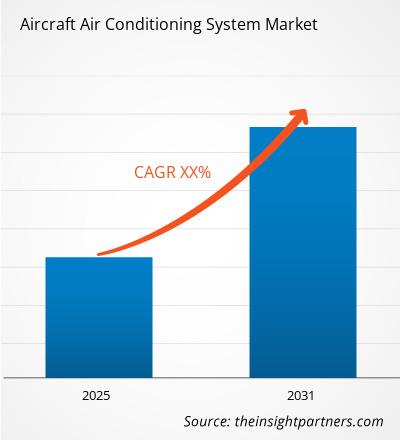
The Aircraft Air Conditioning System Market size is expected to reach US$ 1.89 Billion by 2034 from US$ 1.33 Billion in 2025. The market is estimated to record a CAGR of 4.49% from 2026 to 2034. This steady expansion highlights the growing demand for new aircraft deliveries, retrofitting of aging fleets, and the adoption of energy-efficient ground support and airborne climate control solutions.
Segmental Overview
By Type
- Air Cycle Air Conditioning
- Vapor Cycle Air Conditioning
By Power
- Gasoline
- Electric
- LPG
- Diesel
By Application
- General Aviation
- Airline
- Business Aircraft
Key Players Operating in the Market
The global aircraft air conditioning system landscape comprises prominent manufacturers, ground support equipment providers, and specialized aviation engineering firms. Key players featured in the market report include:
-
MAK Controls and Systems Pvt. Ltd.
-
Aero Specialties, Inc.
-
Freightquip Pty Ltd.
-
JBT Ground Support Equipment
-
Tronair
-
JAMCO Corporation
-
Aeroservicios USA Inc.
-
Kelly Aerospace Inc.
-
Test-Fuchs GmbH
-
Air Comm Corporation
These companies are actively engaged in new product launches, strategic partnerships, geographical expansions, and technological research to deliver lightweight, eco-friendly, and high-performance air conditioning solutions across both airborne and ground support domains.
Get Full Copy of This Report- https://www.theinsightpartners.com/buy/TIPRE00024655
Regional Insights
-
North America: Dominates a significant share of the market due to the presence of leading commercial aircraft manufacturers, robust defense expenditure, and extensive general aviation infrastructure across the United States and Canada.
-
Europe: Focuses heavily on sustainable aviation solutions, stringent environmental regulations, and investments in energy-efficient airport ground support systems.
-
Asia-Pacific: Represents the fastest-growing regional market, propelled by rapid urbanization, expanding middle-class populations, surging domestic passenger traffic, and fleet expansion initiatives by low-cost carriers in countries like India and China.
Future Outlook
The future of the aircraft air conditioning system market is poised to be significantly shaped by the global aviation industry’s drive toward sustainability, electrification, and decarbonization. Over the next decade, market growth will be fueled by the transition toward bleedless architecture, smart digital climate control systems, and eco-friendly refrigerants with lower global warming potential (GWP). Additionally, as airports worldwide enforce stricter ground noise and emissions standards, the adoption of advanced, high-efficiency ground pre-conditioned air (PCA) units will accelerate rapidly. With commercial fleet expansions and continuous defense fleet modernization programs globally, the market is set to maintain a stable upward trajectory through 2034, creating lucrative opportunities for OEMs, component suppliers, and MRO service providers alike.
Related Report-