Key Highlights
-
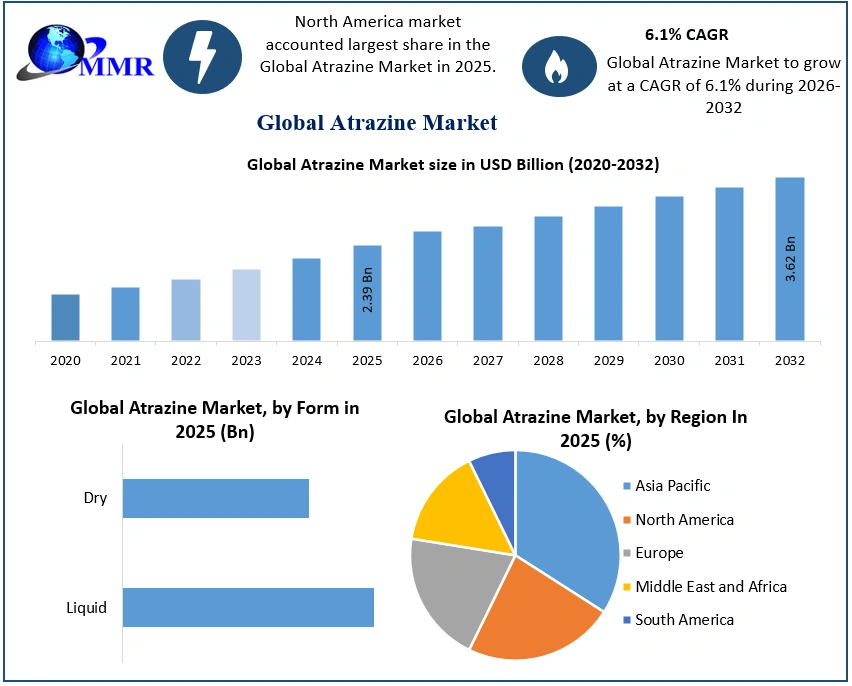
Atrazine Market size was valued at USD 2.39 Billion in 2025 and is expected to reach nearly USD 3.62 Billion by 2032 at a CAGR of 6.1%, indicating steady, crop-driven demand over the forecast period.
-
Atrazine remains one of the most widely used selective herbicides for major row crops, keeping it central to farm input planning in many regions.
-
Regulatory scrutiny and environmental debates around atrazine usage are intensifying, creating strategic complexity for producers and agricultural buyers.
-
Capacity decisions and portfolio strategies must balance stable demand with long-term regulatory and reputational risk.
-
Emerging opportunities focus on integrated weed management solutions and complementary products that enhance atrazine’s effectiveness while managing resistance and environmental concerns.
Why This Matters Now
Chemical manufacturers and procurement leaders cannot treat atrazine as a simple volume product. A market moving from USD 2.39 Billion in 2025 to nearly USD 3.62 Billion by 2032 at 6.1% CAGR means atrazine will continue to anchor weed-management programs across large crop areas, even as regulatory pressure mounts.
For agricultural input distributors and large farming enterprises, that growth trajectory translates into persistent reliance on atrazine for cost-effective weed control, coupled with rising risk that regulations, public opinion or alternative technologies could shift the underlying economics. Decisions taken now on sourcing, diversification and stewardship will shape margins and resilience through 2032.
Market Overview
Atrazine size is a selective herbicide widely used for control of broadleaf and some grassy weeds in crops such as maize (corn), sorghum and sugarcane. Its efficacy, broad spectrum and relatively low cost have made it a staple in many crop protection programs over decades.
The forecast to nearly USD 3.62 Billion by 2032 at 6.1% CAGR signals that atrazine remains embedded in global crop protection strategies, particularly in high-acreage staple crops. This entrenched position means any regulatory or technological disruption will have broad impacts on yields, input costs and farm management practices.
What has changed over recent years is the convergence of yield pressure, environmental scrutiny and resistance management challenges. Farmers and input suppliers now must balance agronomic performance with regulatory compliance and public concerns about herbicides in water and soil.
Key Trends Driving Growth
Downstream demand from major cropping systems is the core driver. As global populations grow and food demand rises, maize and other atrazine-treated crops retain importance in feed, food and biofuel chains, sustaining herbicide needs.
At the same time, weed pressure and resistance dynamics push farmers toward reliable, proven products. Atrazine’s mode of action remains valuable in integrated programs, especially where resistance to other chemistries is spreading. This keeps demand steady even as new products enter the market.
Regulatory and sustainability debates shape the context. In some jurisdictions, atrazine faces tighter application rules, monitoring requirements or partial restrictions due to concerns over water contamination or ecological impacts. This environment encourages more careful stewardship and risk management among producers and users, and can trigger shifts in regional demand patterns.
Request a Free Sample Copy or View Report Summary: https://www.maximizemarketresearch.com/request-sample/67677/
Segment Insights
-
Dominant Segment – Agricultural Crop Protection
The dominant segment for atrazine is agricultural crop protection, particularly broadacre applications in maize, sorghum and sugarcane. This dominance means crop acreage, planting intentions and agronomic practices directly influence atrazine consumption and price cycles. -
Fastest-Growing Segment – Integrated Weed Management Programs
The fastest-growing opportunities lie in integrated weed management systems where atrazine is used alongside other herbicides, mechanical controls and agronomic practices. These programs seek to preserve efficacy, manage resistance and align with sustainability requirements, opening room for bundled solutions and advisory services. -
Feedstock and Production Dynamics
Atrazine production depends on chemical intermediates and established synthesis routes. Feedstock availability and energy costs affect manufacturing economics, pushing producers to optimize plant efficiency and evaluate integration with other crop protection production lines. -
Downstream Use and Formulations
Atrazine is sold in various formulations and combinations, including standalone products and premixes with other herbicides. Formulation strategies influence market positioning, allowing producers to tailor products to specific regional weed spectra and regulatory environments.
Regional Growth Story
In the United States, atrazine has long played a key role in corn belt weed control. Regulatory scrutiny and court challenges have made its future more contested, but its agronomic value keeps it central in many programs where permitted. Producers and buyers must track policy developments closely and invest in stewardship to maintain access.
In Europe, regulatory regimes are stricter, and atrazine use has been constrained or removed in several countries. This reduces regional demand but also highlights how quickly policies can change market structures. Producers serving Europe must adapt portfolios and seek growth in markets with different regulatory stances.
China and India show ongoing demand for cost-effective herbicides to support expanding agriculture and yield targets. Regulatory frameworks are evolving, but atrazine remains important where permitted, particularly in maize and sugarcane belts. These markets offer volume potential but require careful monitoring of policy and public debates.
Japan and South Korea feature more specialized, high-value agriculture, where the balance between productivity, safety and environmental impact is closely managed. Demand patterns here may favor lower-risk or alternative solutions, putting pressure on atrazine-focused strategies and encouraging producers to diversify.
Competitive Landscape
The atrazine market includes global crop protection majors and regional agrochemical producers. Large incumbents often hold significant share through broad product portfolios, distribution networks and technical support, giving them leverage in pricing and long-term contracts.
Capacity expansions or reductions signal strategic positions on atrazine’s future. When a producer invests in maintaining or upgrading atrazine plants, it suggests confidence in sustained demand and manageable regulatory risk. Conversely, reductions or redeployments of capacity can indicate expectation of tighter rules or shifts toward alternative chemistry.
Competition increasingly hinges on risk management and portfolio breadth. Players with diversified herbicide offerings, alternative modes of action and strong stewardship programs can better navigate any regulatory shocks. Those heavily concentrated in atrazine face higher exposure if policies or public sentiment move abruptly against the molecule.
Recent Developments
-
Adjustments to regional capacity and production planning as producers weigh demand growth against regulatory uncertainty.
-
Expansion of premix and combination products where atrazine is paired with other herbicides to improve spectrum and resistance management.
-
Increased emphasis on stewardship initiatives, training and application guidance to mitigate environmental and regulatory risks.
-
Strategic rebalancing of portfolios in markets where atrazine faces tighter controls, with greater attention to alternative active ingredients.
Strategic Implications
For chemical manufacturers, atrazine requires a nuanced strategy. Stable demand at 6.1% CAGR supports investment in efficiency and supply reliability, but regulatory challenges and reputational issues demand robust risk management and clear engagement with policymakers and stakeholders.
Procurement leaders and distributors must plan for both continuity and contingency. Securing reliable atrazine supply where it remains permitted is critical for farmers’ weed control, yet building alternative options and integrated programs will reduce vulnerability to sudden policy or market changes.
Investors should view atrazine as part of a wider crop protection portfolio rather than a standalone bet. The molecule’s economic importance is clear, but longer-term strategies that incorporate diversification, sustainability and resistance management are more likely to deliver resilient returns.
Future Outlook
With the Atrazine Market set to grow from USD 2.39 Billion in 2025 to nearly USD 3.62 Billion by 2032 at a 6.1% CAGR, the next decade will be shaped by how producers and buyers balance agronomic performance against regulatory and environmental risk. Integrated weed management, portfolio diversification and proactive stewardship will become the central levers of competitive advantage.
The decisive edge will belong to companies and agricultural systems that treat atrazine as one tool in a broader, resilient strategy—rather than a single-point dependency—while those that ignore regulatory signals and sustainability demands will face higher risk of abrupt disruption to supply, pricing and market access.
Related Reports
Global GlutenFree Pasta Market https://www.maximizemarketresearch.com/market-report/global-gluten-free-pasta-market/29879/
Global Brass Rods Market https://www.maximizemarketresearch.com/market-report/global-brass-rods-market/80637/
Global Dicyclopentadiene Market https://www.maximizemarketresearch.com/market-report/global-dicyclopentadiene-market/55212/
Analyst Perspective
“As regulators, farmers and suppliers confront the trade-offs between yield, cost and environmental impact, players that embed atrazine inside diversified, stewardship-driven weed management strategies will shape pricing, access and long-term competitiveness across global agriculture,” Ankita Kagawade
About Maximize Market Research
Maximize Market Research Pvt. Ltd. (MMR) is a global market research and consulting company that provides reliable, data-focused, and practical business insights. The firm serves a wide range of industries, including healthcare, pharmaceuticals, technology, automotive, electronics, chemicals, personal care, and consumer goods. Through market forecasts, competitive analysis, strategic consulting, and industry impact assessments, MMR helps organizations understand changing market conditions, identify growth opportunities, and make informed business decisions for long-term success.
2nd Floor, Navale IT Park Phase 3
Pune Banglore Highway, Narhe
Pune, Maharashtra 411041, India
+91 9607365656
sales@maximizemarketresearch.com