The aviation industry is undergoing a digital transformation, with digital flight strips emerging as a cornerstone for enhancing air traffic management (ATM) efficiency. Unlike traditional paper flight strips, digital versions offer real-time data integration, reducing errors and streamlining controller workflows. This shift supports the growing demands of global air travel, where safety, speed, and sustainability are paramount.
Market Overview and Growth Drivers
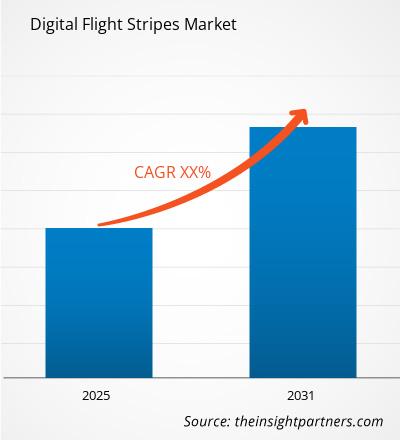
The Digital Flight Strips Market size is expected to reach US$ 1,530.00 Million by 2034 from US$ 630.00 Million in 2025. The market is anticipated to register a CAGR of 10.36% during the forecast period 2026–2034. This robust growth reflects the aviation sector’s push toward automation amid rising air passenger traffic, projected to exceed 8.2 billion annually by 2035 according to the International Air Transport Association (IATA).
Key drivers include the adoption of NextGen in the U.S. and SESAR in Europe, which mandate advanced ATM technologies. Digital flight strips integrate seamlessly with radar systems, electronic flight data, and automation tools, enabling controllers to manipulate data intuitively via touchscreens or multi-user interfaces. For instance, during peak hours at busy hubs like Atlanta or Dubai, these systems cut strip handling time by up to 30%, minimizing delays and fuel burn.
Technological advancements, such as AI-driven predictive analytics and cloud-based platforms, further propel demand. Post-pandemic recovery has accelerated investments, with airports upgrading to handle surging flights while complying with stricter safety regulations from bodies like the International Civil Aviation Organization (ICAO).
Technological Advancements Fueling Adoption
Digital flight strips leverage software like Electronic Flight Strips (EFS) and integrate with Airport Collaborative Decision Making (A-CDM) for optimized runway sequencing. Hardware innovations, including high-resolution displays and voice recognition, enhance usability in high-stress tower environments. The shift from legacy systems to IP-based networks ensures scalability, supporting remote tower operations a trend gaining traction in regions like Scandinavia and Australia.
In Asia-Pacific, rapid airport expansions in India and China drive market share, with governments allocating billions for smart aviation infrastructure. North America leads due to FAA initiatives, while Europe’s single airspace program fosters cross-border interoperability. Challenges persist, including high initial costs and cybersecurity risks, but falling hardware prices and standardized protocols are easing barriers.
Get a PDF Sample– https://www.theinsightpartners.com/sample/TIPRE00017699
Key Players Shaping the Market
Leading companies are innovating with user-centric solutions, strategic partnerships, and R&D investments to capture market share. Prominent players include:
-
Adacel Systems Inc.: Specializes in AI-enhanced ATM software for efficient strip management.
-
ADB Safegate: Offers integrated lighting and digital strip solutions for airport operations.
-
Frequentis: Provides advanced communication and flight data systems with multi-controller support.
-
I2M Systems Inc.: Focuses on customizable digital strip tools for regional towers.
-
Indra Navia AS: Delivers end-to-end ATM platforms with strong European compliance.
-
Lockheed Martin Corporation: Leverages defense expertise for secure, high-reliability systems.
-
NAVCANATM: Excels in collaborative ATM tools for oceanic and en-route control.
-
SAAB AB: Innovates in remote towers with seamless digital strip integration.
-
Saipher ATC: Develops AI-powered predictive stripping for conflict resolution.
-
YAZICI COMPANY LIMITED: Provides cost-effective solutions for emerging markets.
These firms dominate through mergers, like Frequentis’s acquisitions, and pilots demonstrating 20-25% productivity gains.
Regional Insights and Challenges
North America holds the largest share, buoyed by U.S. DoT funding for modernized towers. Europe follows, with EASA approvals spurring deployments at major hubs like Heathrow. Asia-Pacific grows fastest at over 12% CAGR, driven by India’s UDAN scheme and China’s Belt and Road airport projects. Latin America and the Middle East lag but show promise via PPP models.
Integration with legacy systems remains a hurdle, alongside data privacy concerns under GDPR. Vendors counter this with modular designs and blockchain for secure data sharing.
Get Full Copy of This Report– https://www.theinsightpartners.com/buy/TIPRE00017699
Future Outlook
Looking ahead, the digital flight strips market will evolve with 5G, machine learning, and augmented reality (AR) overlays, enabling holographic strip visualizations. By 2034, full automation could handle 70% of routine tasks, freeing controllers for complex decisions. Sustainability goals will integrate emissions data into strips, optimizing routes for net-zero aviation. Emerging markets like Africa will leapfrog via cloud solutions, while regulatory harmonization boosts global standards. With investments surpassing US$ 2 billion annually, this market promises safer, greener skies.
Related Reports–
Flight Engine Monitoring System Market
Enhanced Flight Vision System Market
In-Flight Autopilot Systems Market
The Insight Partners is a one-stop industry research provider of actionable intelligence. We help our clients in getting solutions to their research requirements through our syndicated and consulting research services. We specialize in industries such as Semiconductor and Electronics, Aerospace and Defense, Automotive and Transportation, Biotechnology, Healthcare IT, Manufacturing and Construction, Medical Devices, Technology, Media, and Telecommunications, as well as chemicals and Materials.
Contact Us
If you have any queries about this report or if you would like further information, don’t hesitate to get in touch with us:
Contact Person: Ankit Mathur
E-mail: ankit.mathur@theinsightpartners.com
Phone: +1-646-491-9876