
Key Highlights
-
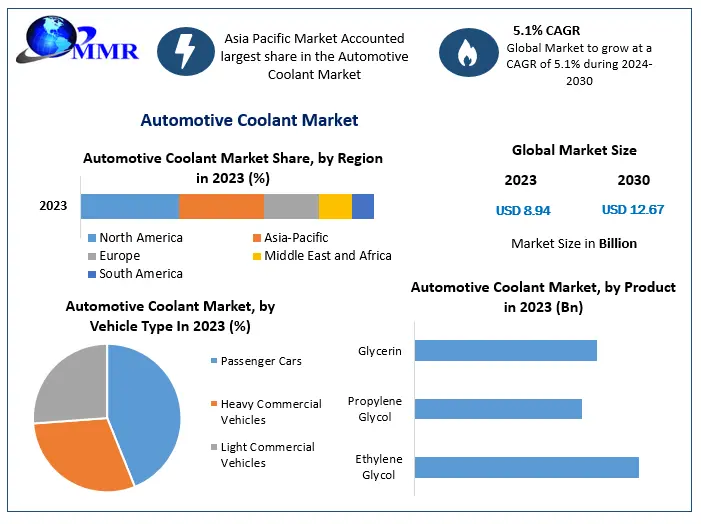
The global automotive coolant market reached a valuation of USD 8.94 Billion in 2023 and is on track to achieve USD 12.67 Billion by 2030.
-
The industry maintains a steady 5.1% compound annual growth rate during the 2024 to 2030 forecast timeline.
-
The passenger car vehicle type remains the dominant consumer of thermal fluids, fueled by expanding light utility vehicle volumes across emerging markets.
-
Glycerine and Organic Acid Technology solutions represent the fastest-growing technology blocks due to strict environmental mandates and anti-corrosion demands.
-
The rapid adoption of full battery electric platforms presents a structural volume challenge to legacy internal combustion engine coolant blends.
Why This Matters Now
Automotive OEMs and chemical formulation teams are operating under strict environmental boundaries that require a total reimagining of engine fluid life cycles. Legacy ethylene glycol formulations, while highly effective at heat dissipation, face intense regulatory pushback due to toxicity profiles and disposal hazards. This has forced major automotive stakeholders to shift toward sustainable, eco-friendly base liquids that maintain performance metrics without compromising corporate carbon commitments.
Simultaneously, the global expansion of passenger vehicle ownership in developing regions creates an immediate, massive demand for stable thermal management solutions. Vehicles are operating longer lifecycles in volatile climates, increasing the burden on engine components and cooling systems alike. For Tier-1 fluid suppliers, adapting to these demands is a matter of business survival, as vehicle manufacturers consolidate their supply contracts in favor of tailored, long-life chemical formulas.
Market Overview
The global Automotive Coolant Market is demonstrating steady volume expansion, establishing a solid baseline valuation of USD 8.94 Billion in 2023. Moving forward at a 5.1% CAGR, total market revenues are projected to reach USD 12.67 Billion by 2030. This sector operates as a specialized segment within the broader automotive lubricants and fluids landscape, cutting across light utility models, passenger cars, and heavy transport platforms.
What changed is the baseline expectation for fluid longevity and metal protection within the engine bay. Traditional formulations required frequent flush-and-fill operational intervals, creating significant aftermarket waste and high maintenance costs for logistics operators. Modern vehicle architectures require long-drain or fill-for-life fluid strategies that resist chemical breakdown under high localized thermal loads while shielding aluminum surfaces from high-temperature corrosion.
Key Trends Driving Growth
The most critical engineering trend altering the fluid market is the rapid deployment of Organic Acid Technology (OAT). By utilizing neutralized organic acids and azoles, chemical formulators have substantially lowered the risks of cavitation, material degradation, and scale accumulation in modern radiator designs. This chemistry directly prevents early system leaks and mitigates field-failure warranty claims for high-volume automotive brands.
Furthermore, aftermarket activity is experiencing a significant shift toward fluid recycling and closed-loop reclamation programs. As municipalities enforce strict waste-disposal rules, automotive repair networks and corporate fleet operators are investing in filtering systems to clean and reuse glycol-based fluids. This trend alters the volume consumption of virgin base chemicals while boosting the commercial relevance of highly stable, premium fluid varieties.
Segment Insights
-
Dominant Segment: Passenger Cars: This vehicle segment accounts for the highest volume consumption globally, sustained by continuous purchasing power gains and a consumer preference for personal mobility options. The high production rate of sport utility vehicles and multi-purpose platforms across developing nations keeps baseline assembly-line demand stable.
-
Fastest-Growing Segment: Glycerine and OAT Solutions: Glycerine-based formulas and alternative base fluids like 1,3-propanediol are capturing fast-paced revenue growth within the aftermarket segment. These options attract buyers seeking high-performance profiles combined with lowered environmental footprints.
-
Supply Channel Mix: Original Equipment Manufacturing contracts dictate primary chemical production profiles, but the aftermarket repair segment generates continuous, high-margin revenue as global vehicle parcs age and require routine fluid servicing.
Regional Growth Story
Asia Pacific maintains a highly dominant position within the global automotive coolant landscape. The territory benefits from concentrated, low-cost chemical production corridors, affordable labor forces, and massive automotive assembly operations. China, India, and Japan operate as the central pillars of this ecosystem, combining heavy domestic vehicle consumption with global chemical export programs.
India, in particular, is experiencing accelerated volume demand as domestic passenger vehicle manufacturing climbs to meet consumer needs. In contrast, Western European and North American markets are characterized by value-driven growth focused on strict chemical compliance and premium technical specifications. European regulations pushing for reduced chemical hazards continue to accelerate the development of bio-derived base liquids.
Competitive Landscape
The global competition for automotive fluid dominance is concentrated among major multi-national chemical enterprises and dedicated automotive lubricant brands. These organizations maintain their positions by controlling massive raw material supply chains and protecting specialized patent portfolios for additive packages.
Market leadership depends heavily on a manufacturer’s ability to achieve official OEM approvals and secure factory-fill contracts for new vehicle platforms. Global chemical producers are defending their market share by introducing custom-tailored product lines that match the specific metal compositions of modern engine blocks. This dynamic creates a challenging environment for regional, unapproved blenders who cannot match the testing validation or scale of the leading brands.
Recent Developments
-
Major chemical formulators are scaling production capacity for bio-based glycol and glycerine alternatives to comply with upcoming corporate sustainability targets.
-
Tier-1 fluid developers are introducing customized coolant brands tailored directly to the localized metal and temperature needs of individual vehicle manufacturers.
-
Consolidation among aftermarket distributors is streamlining the product pipeline, making factory-approved fluid formulations more accessible to independent repair workshops.
Strategic Implications
For traditional fluid blenders, the ongoing shift toward alternative bases and organic technologies requires immediate, purposeful capital reallocation. Companies that remain anchored to basic, high-silicate glycol products will likely face declining access to premium OEM supply chains. Investments must be steered toward advanced blending facilities, localized laboratory validation, and green chemistry inputs to preserve long-term contract profitability.
For vehicle manufacturers, fluid reliability is tied directly to vehicle durability scores and customer satisfaction. As engine components undergo downscaling and turbocharging to meet emission goals, internal thermal stresses increase significantly, making precise fluid engineering non-negotiable. OEMs must establish secure, multi-source chemical supply paths for premium additives to prevent assembly disruptions and shield themselves from localized material shortages.
Future Outlook
The global automotive coolant market will continue its steady expansion, balanced by the parallel demands of expanding internal combustion platforms in emerging economies and changing thermal management structures globally. The structural move toward longer drain intervals and eco-friendly chemistries will systematically phase out legacy, hazardous formulas. The future division between dominant market leaders and fading market laggards will be determined by the capability to supply highly stable, environmentally neutral fluid solutions at scale.
Analyst Perspective
“The automotive coolant sector is shifting past basic glycol options. Future profitability belongs entirely to chemical organizations that can deliver long-life, organic acid formulations that meet strict ecological standards while matching the extreme thermal management needs of modern downsized passenger platforms.“Dharati Raut, Analyst, Maximize Market Research
About Maximize Market Research
Maximize Market Research Pvt. Ltd. (MMR) is a global market research and consulting company that provides reliable, data-focused, and practical business insights. The firm serves a wide range of industries, including healthcare, pharmaceuticals, technology, automotive, electronics, chemicals, personal care, and consumer goods. Through market forecasts, competitive analysis, strategic consulting, and industry impact assessments, MMR helps organizations understand changing market conditions, identify growth opportunities, and make informed business decisions for long-term success.
2nd Floor, Navale IT Park Phase 3
Pune Banglore Highway, Narhe
Pune, Maharashtra 411041, India
+91 9607365656
sales@maximizemarketresearch.com

