
The Internet of Things (IoT) has transformed how organizations connect devices, systems, applications, and users. As enterprises increasingly deploy connected sensors, smart devices, industrial equipment, wearables, and connected infrastructure, the need to securely manage digital identities has become critical. IoT Identity Access Management (IAM) solutions enable organizations to authenticate users and devices, authorize access, manage credentials, and control permissions across increasingly complex connected environments.
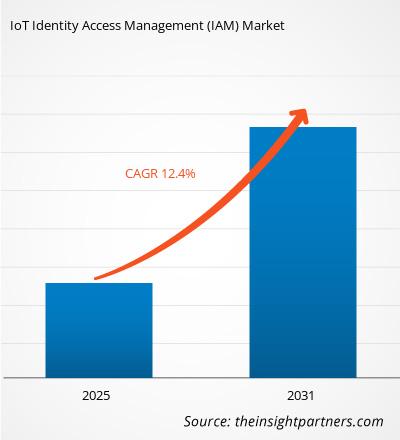
According to the latest market analysis, The IoT Identity Access Management (IAM) Market size is expected to reach US$ 30.54 Billion by 2034 from US$ 5.58 Billion in 2025. The market is estimated to record a CAGR of 20.80% from 2026 to 2034.
Why Is the IoT IAM Market Growing Rapidly?
The growing number of connected devices is one of the primary factors driving demand for IoT IAM solutions. Unlike traditional IT environments, IoT ecosystems may involve thousands or millions of devices communicating with one another and exchanging sensitive information. Each device can represent a potential entry point for cyberattacks if it is not properly authenticated and monitored.
The increasing frequency and sophistication of cybersecurity threats are encouraging enterprises to strengthen identity-based security. Organizations are moving beyond conventional username-and-password approaches toward stronger authentication, device identity management, multi-factor authentication, and context-aware access controls. The market analysis identifies rising cybersecurity threats as a key growth driver.
IoT IAM also supports the growing adoption of cloud computing and hybrid IT infrastructures. Enterprises need centralized mechanisms for controlling access across cloud platforms, on-premise systems, connected devices, and applications. Cloud-based IAM solutions can provide flexibility and scalability while reducing the administrative burden associated with managing large IoT environments.
Get Sample PDF of the report @ https://www.theinsightpartners.com/sample/TIPRE00028890
What Are the Key Market Trends?
One important trend is the growing emphasis on device identity management. As connected devices increasingly act as independent participants within enterprise networks, organizations need reliable methods for establishing device identities and verifying whether a device should be trusted. IAM platforms can help organizations maintain device credentials, enforce authentication policies, and control access throughout the device lifecycle.
Another important trend is the integration of IoT IAM with zero-trust security strategies. Zero trust assumes that users and devices should not automatically be trusted simply because they are operating within an organization’s network. Instead, identities, permissions, device conditions, and access requests are continuously evaluated.
The adoption of stronger authentication technologies is also creating opportunities. IoT environments can support authentication through biometric technologies, smart devices, certificates, and other mechanisms. The market report specifically highlights enhanced authentication systems as an opportunity for IoT IAM providers.
How Is the Market Segmented?
The IoT Identity Access Management Market is segmented according to component, enterprise size, deployment model, and end user.
By component, the market is divided into solutions and services. Solutions include technologies that help organizations authenticate identities, authorize access, manage credentials, and enforce security policies. Services can include consulting, implementation, integration, support, and managed services.
By enterprise size, the market is categorized into small and medium-sized enterprises (SMEs) and large enterprises. Large enterprises are expected to remain important consumers because of their extensive IoT infrastructure and complex access requirements. At the same time, increasing awareness of cybersecurity risks is encouraging SMEs to adopt scalable IAM solutions.
By deployment model, the market covers on-premise and cloud deployments. On-premise solutions can provide organizations with greater control over infrastructure and data, while cloud-based solutions offer scalability, accessibility, and simplified management. The continued shift toward cloud infrastructure is expected to support demand for cloud-based IoT IAM.
By end user, the market includes education, IT and telecommunications, retail, media and entertainment, government, and other sectors.
Which Industries Are Driving Demand?
The IT and telecommunications sector represents a significant application area because telecom networks and technology companies operate large numbers of connected systems and devices. IAM capabilities can help these organizations control access to network resources and connected infrastructure.
The retail sector is also adopting IoT technologies through smart shelves, connected point-of-sale systems, inventory monitoring, surveillance systems, and other applications. Protecting these connected systems requires effective authentication and access management.
In government, IoT IAM can help protect connected infrastructure and sensitive information. Smart-city initiatives, public infrastructure, connected transportation, and government facilities increasingly depend on IoT technologies, creating additional requirements for secure identities and access controls.
The education sector is another emerging application area. Connected classrooms, smart campuses, digital learning systems, and network-connected devices increase the number of identities and endpoints that institutions must manage securely.
What Opportunities Exist in the IoT IAM Market?
The expanding consumer IoT ecosystem offers significant opportunities for IAM providers. Smart home appliances, wearable devices, connected vehicles, and other consumer products increasingly process personal and sensitive information. Secure identity management can help protect these devices from unauthorized access and misuse.
Another opportunity lies in the management of non-human identities. IoT devices, applications, APIs, sensors, and machines increasingly require their own credentials and permissions. Organizations therefore need IAM platforms capable of managing identities throughout their entire lifecycle, including provisioning, authentication, authorization, monitoring, and revocation.
Artificial intelligence and behavioral analytics can further enhance IoT IAM by helping organizations identify unusual access patterns and potentially compromised devices. These capabilities can support faster detection and more adaptive access decisions.
What Challenges Could Limit Market Growth?
Despite strong growth prospects, IoT IAM providers face several challenges. IoT environments are highly diverse, with devices using different operating systems, communication protocols, hardware capabilities, and security standards. Integrating IAM across such heterogeneous ecosystems can be complex.
Legacy IoT devices may also lack modern security capabilities, making them difficult to integrate with advanced identity management systems. Organizations may need additional investment in infrastructure upgrades, integration, and security policies.
Data privacy and regulatory requirements represent another challenge. IoT devices frequently collect and transmit sensitive information, requiring organizations to establish appropriate controls around identity, access, storage, and data usage.
Get the Premium Research Report @ https://www.theinsightpartners.com/buy/TIPRE00028890
What Is the Regional Outlook?
The IoT IAM market is analyzed across North America, Europe, Asia-Pacific, South and Central America, and the Middle East and Africa. The United States is identified as a key market because of rising cybersecurity threats, the need for scalable access control, and continued adoption of connected technologies.
Asia-Pacific is also expected to present significant opportunities as enterprises and governments expand smart-city programs, industrial IoT deployments, connected infrastructure, and digital transformation initiatives. Europe is supported by growing attention to cybersecurity, privacy, and regulatory compliance.
Top Key Player in the IoT Identity Access Management (IAM) Market
- IBM Corporation
- Microsoft Corporation
- Amazon Web Services
- LogMeIn, Inc.
- Intel Security Group
- Oracle Corporation
- Siemens AG
- CA Technologies
- Cloud Security Alliance
- Arcon Tech Solutions
Future Outlook
The combination of expanding IoT adoption, rising cyber threats, cloud migration, zero-trust security, and demand for stronger authentication is expected to create sustained opportunities for IoT IAM providers. Companies that deliver scalable, interoperable, and intelligent identity solutions will be well positioned to address the evolving security requirements of connected environments.
About The Insight Partners
The Insight Partners is a global leader in market research, delivering comprehensive analysis and actionable insights across diverse industries. The company empowers decision-makers with data-driven intelligence to navigate evolving markets and accelerate growth.
Contact Us:
- Contact Person: Ankit Mathur
- E-mail: ankit.mathur@theinsightpartners.com
- Phone: +1-646-491-9876
Also Available in :
Korean German Japanese French Chinese Italian Spanish

