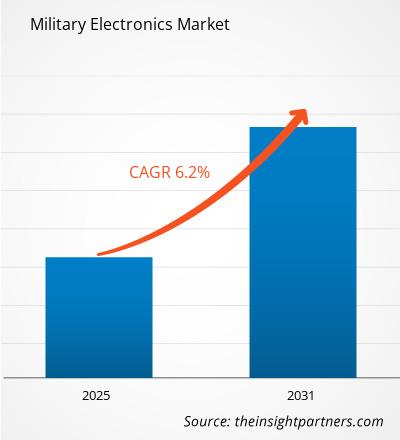
The global military electronics market is experiencing significant momentum, driven by escalating geopolitical tensions, rapid advancements in defense technologies, and the urgent push for modernized military capabilities. As nations worldwide prioritize superior electronic systems for surveillance, communication, and combat operations, the sector stands at the forefront of innovation in defense electronics systems.
This press release explores key trends shaping the military electronics market, including the integration of cutting-edge technologies like AI-driven sensors, secure communication networks, and resilient radar systems. Without delving into granular data, the focus remains on how these developments are propelling the industry toward a future of enhanced operational efficiency and strategic superiority.
Market Projection Highlights
The Military Electronics Market is projected to reach US$ 299.17 billion by 2034 from US$ 175.66 billion in 2025. The market is anticipated to register a CAGR of 6.09% during the forecast period 2026-2034. This trajectory underscores the sector’s resilience amid economic uncertainties, supported by sustained demand for superior defense electronics systems.
Driving Forces Behind Military Electronics Market Growth
Several pivotal factors are fueling the expansion of the military electronics market. Foremost among them is the global surge in defense budgets, as governments invest heavily in next-generation electronics to counter emerging threats. Modern warfare increasingly relies on sophisticated military communication electronics, electronic warfare (EW) systems, and avionics, which provide real-time intelligence and precision targeting.
Technological breakthroughs play a starring role. The adoption of gallium nitride (GaN)-based components enhances power efficiency in radar and electronic countermeasures, while software-defined radios revolutionize secure data transmission. Cybersecurity integration is another cornerstone, safeguarding military electronics against sophisticated cyber threats in contested environments.
Regional dynamics further amplify growth. North America leads due to substantial R&D investments by major powers, while Asia-Pacific emerges as a hotspot, propelled by territorial disputes and naval buildups. Europe focuses on collaborative defense initiatives, emphasizing interoperable systems across NATO allies.
Get a PDF Sample- https://www.theinsightpartners.com/sample/TIPRE00017094
Innovations Reshaping Defense Electronics Systems
The military electronics market thrives on relentless innovation. Key segments include:
-
Radar and Surveillance Systems: Advanced phased-array radars deliver unparalleled detection ranges, enabling early warning and missile defense.
-
Military Communication Electronics: Satellite-linked networks ensure seamless connectivity for ground troops, aircraft, and naval fleets, even in denied environments.
-
Electronic Warfare Solutions: Jamming and deception technologies disrupt adversary signals, maintaining electromagnetic spectrum dominance.
-
Avionics and Navigation: GPS-independent inertial systems bolster aircraft and unmanned vehicles with precise guidance.
These advancements address critical pain points like miniaturization for drones and ruggedization for harsh battlefield conditions. Industry leaders are pioneering hybrid architectures that blend analog and digital components, reducing size, weight, and power (SWaP) while boosting performance.
Sustainability is gaining traction too. Eco-friendly manufacturing processes and recyclable materials align military electronics with global green defense mandates, ensuring long-term viability without compromising reliability.
Key Players in the Military Electronics Market
Leading the charge in the military electronics market are industry titans with proven expertise in delivering mission-critical solutions. These companies drive innovation through strategic partnerships, R&D investments, and cutting-edge integrations.
-
BLIGHTER SURVEILLANCE SYSTEMS LTD: Specializes in ground surveillance radars for perimeter security and border protection, offering covert detection in challenging terrains.
-
Boeing: Renowned for integrated avionics and electronic systems in fighter jets and unmanned platforms, enhancing aerial dominance.
-
ELBIT SYSTEMS LTD: Excels in electro-optical systems, C4I solutions, and digital upgrades for armored vehicles and infantry gear.
-
L3Harris Technologies Inc: Provides advanced communication radios, EW payloads, and night vision technologies for multi-domain operations.
-
LEONARDO S.P.A: Leads in radar, optronics, and mission systems for helicopters, naval vessels, and airborne early warning.
-
Lockheed Martin Corporation: Dominates with F-35 avionics, hypersonic weapon electronics, and space-based surveillance networks.
-
Northrop Grumman Corporation: Innovates in active electronically scanned arrays (AESA) radars and autonomous systems for global strike capabilities.
-
Raytheon Technologies Corporation: Pioneers missile guidance electronics, infrared sensors, and integrated air defense solutions.
-
SAAB AB: Focuses on fighter jet electronics, submarine combat systems, and training simulators for NATO interoperability.
-
Thales Group: Delivers secure comms, sonar arrays, and ground-based air defense electronics with a strong emphasis on cybersecurity.
These players collectively hold substantial market influence, fostering a competitive landscape ripe for mergers, acquisitions, and tech collaborations.
Get Full Copy of This Report-https://www.theinsightpartners.com/buy/TIPRE00017094
Future Outlook
Looking ahead, the military electronics market promises transformative growth, propelled by emerging technologies like quantum sensors, 6G-enabled communications, and AI-orchestrated swarms. Hypersonic platforms and directed-energy weapons will demand ultra-high-speed electronics, while space domain awareness drives satellite constellations with onboard processing. Collaborative frameworks, such as multinational procurement pacts, will accelerate standardization. Challenges like supply chain vulnerabilities and export controls persist, but proactive strategies including domestic manufacturing and resilient architectures will mitigate risks. Stakeholders should prioritize agile R&D to capitalize on this dynamic landscape, ensuring military readiness in an era of hybrid threats.
Other Reports–
Defense Electronic Security and Cybersecurity Market
Electronic Cartographic Marine Market
About Us
The Insight Partners is a one-stop industry research provider of actionable intelligence. We help our clients in getting solutions to their research requirements through our syndicated and consulting research services. We specialize in industries such as Semiconductor and Electronics, Aerospace and Defense, Automotive and Transportation, Biotechnology, Healthcare IT, Manufacturing and Construction, Medical Devices, Technology, Media, and Telecommunications, as well as chemicals and Materials.
Contact Us
If you have any queries about this report or if you would like further information, don’t hesitate to get in touch with us:
Contact Person: Ankit Mathur
E-mail: ankit.mathur@theinsightpartners.com
Phone: +1-646-491-9876