
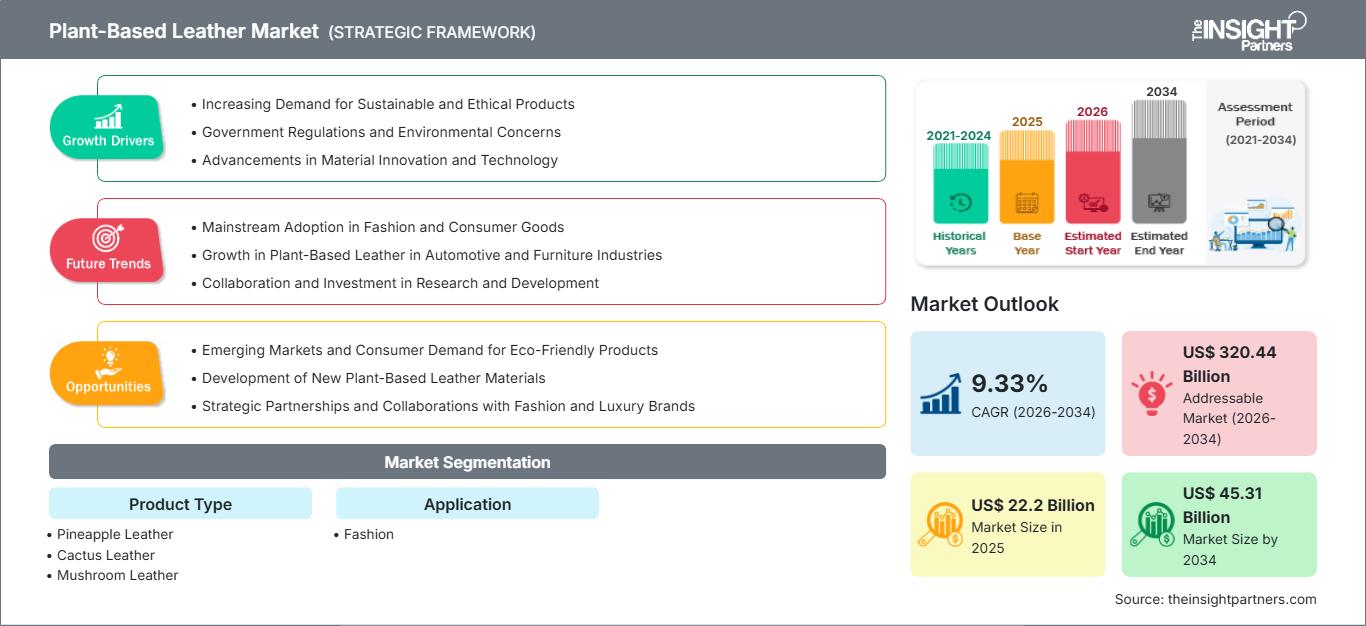
Fashion is quietly rethinking what leather even means. Pineapple leaves, cactus pads, mushroom fibres, apple waste. None of this sounds like leather, yet all of it is becoming leather’s biggest challenger. The Plant-Based Leather Market is projected to grow from US$ 22.2 Billion in 2025 to US$ 45.31 Billion by 2034, at a strong CAGR of 9.33% from 2026 to 2034. Few materials markets are moving this fast, and the reasons behind it go well beyond fashion trends.
What Is the Plant-Based Leather Market?
Plant-based leather is a material made from natural fibres such as pineapple, cactus, mushroom, or apple waste, designed to look and feel like animal leather. It offers a cruelty-free, lower-impact alternative for fashion, automotive, and home industries. Brands use it to meet growing demand for ethical, sustainable materials.
Market Drivers
Why is growth accelerating so fast here?
Consumer values have shifted. Younger buyers care deeply about how products are made. They question animal leather’s environmental footprint and its ties to livestock farming. Plant-based alternatives answer that concern directly, without asking shoppers to sacrifice style.
Request a Sample Copy of the Report: https://www.theinsightpartners.com/sample/TIPRE00040467
Fashion brands are responding at scale. Clothing, footwear, and accessory lines increasingly feature pineapple leather and cactus leather as premium, story-driven materials. What makes this particularly significant is that these are not niche experiments anymore, they are appearing in mainstream collections from established labels.
Automotive interiors add a surprising growth channel. Car manufacturers are testing plant-based leather for seats and trim, driven by sustainability commitments and consumer pressure inside the EV market especially. Volkswagen’s involvement in this space signals that plant-based materials are moving well past fashion into serious industrial application.
Regulatory pressure plays a supporting role too. Some regions are scrutinising the environmental cost of livestock farming and traditional leather tanning, which uses heavy chemical processing. Plant-based leather sidesteps much of that concern, offering brands a cleaner supply chain story to tell customers and investors alike.
Innovation keeps expanding what is possible. Mushroom leather, made from mycelium, has improved significantly in texture and durability over recent years. Apple leather, often made from waste left over from juice production, adds a circular economy angle that resonates with sustainability-focused buyers. So it is not just ethics driving this market, it is genuine material performance catching up to expectations.
Segmentation Overview
Segments Covered
By Product Type: Pineapple Leather leads adoption, backed by strong brand partnerships and proven durability. Cactus Leather and Mushroom Leather are gaining fast, while Apple Leather appeals to brands focused on circular, waste-based sourcing.
By Application: Fashion dominates the market, spanning Clothing, Accessories, and Footwear. Automotive Interior is emerging as a high-value growth segment, while Home applications, such as furniture upholstery, add a steady secondary demand stream.
Key Market Players
- Will’s Vegan
- Pinatex
- Veja
- Clarino
- Viridis
- Ananas Anam
- DESSERTO
- NUPELLE Mabel
- Volkswagen
This market blends specialised material innovators with established fashion and automotive brands. Ananas Anam, the company behind Pinatex, remains a pioneer in pineapple leather supply. DESSERTO has built strong recognition in cactus leather, while Volkswagen’s participation shows how far plant-based leather has travelled beyond its fashion origins.
Sustainability and Innovation Trends
Circular sourcing is central to this market’s identity. Pineapple leather uses leaf waste from existing agricultural operations, meaning no additional land or water is needed to grow the raw material. Apple leather follows a similar model, repurposing byproducts that would otherwise go to waste.
Durability improvements continue to matter. Early plant-based leathers faced criticism for wearing out faster than animal leather. Manufacturers have responded with better coating and finishing techniques, closing that performance gap year over year.
Biodegradability is becoming a competitive differentiator. Some producers are developing formulations designed to break down more easily at end of life, addressing a criticism often aimed at synthetic leather alternatives. This is not just a trend, it is a structural shift in how material durability and environmental impact are being balanced together.
Buy Premium Report: https://www.theinsightpartners.com/buy/TIPRE00040467
Regional Outlook
Europe leads the market, supported by strong sustainability regulations and high consumer awareness around ethical fashion. Fashion capitals across the region have embraced plant-based leather in mainstream and luxury collections alike.
North America follows closely, driven by growing vegan and cruelty-free consumer movements alongside expanding automotive interest in sustainable materials.
Asia Pacific shows the fastest growth potential. Rising manufacturing capacity, particularly in countries with strong agricultural by-product availability, is fuelling both production and domestic demand.
South and Central America is an emerging market, with countries like Brazil exploring plant-based leather production tied to local agricultural resources.
Related Reports:
About The Insight Partners
The Insight Partners is among the leading market research and consulting firms in the world. We take pride in delivering exclusive reports along with sophisticated strategic and tactical insights into the industry. Reports are generated through a combination of primary and secondary research, solely aimed at giving our clientele a knowledge-based insight into the market and domain. This is done to assist clients in making wiser business decisions. A holistic perspective in every study undertaken forms an integral part of our research methodology and makes the report unique and reliable.
Contact Us:
If you have any queries about this report or if you would like further information, please contact us:
Phone: +1-646-491-9876
E-mail: sales@theinsightpartners.com
Also Available in: Korean | German | Japanese | French | Chinese | Italian | Spanish


