Key Highlights
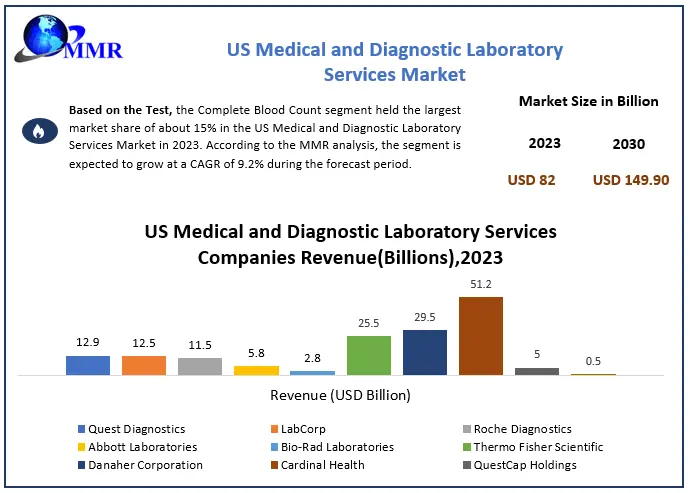
- The US Medical and Diagnostic Laboratory Services Market was valued at USD 81.1 billion in 2023 and is expected to reach USD 124.2 billion by 2030, growing at a CAGR of 6.2% during 2024–2030.
- Increasing demand for disease detection, preventive testing, and advanced diagnostics is expanding laboratory service adoption.
- The Hospital-Based Laboratories segment dominated the market in 2023 due to strong integration with healthcare systems.
- Molecular diagnostics, automation, and advanced testing technologies are creating new opportunities for laboratory providers.
Why This Matters Now
Healthcare providers and diagnostic companies are facing rising demand for faster, more accurate, and more personalized testing solutions. The US Medical and Diagnostic Laboratory Services Market is gaining strategic importance as diagnostics move closer to the center of disease prevention, treatment decisions, and patient management.
Laboratory services now influence healthcare pathways across oncology, infectious diseases, chronic conditions, and precision medicine. Companies that improve testing efficiency, data integration, and patient access are positioned to capture growth in a more technology-driven healthcare environment.
Market Overview
The US Medical and Diagnostic Laboratory Services Market includes laboratory services used for disease diagnosis, screening, monitoring, and clinical decision-making. These services include pathology testing, clinical chemistry, molecular diagnostics, genetic testing, and other laboratory-based solutions.
The market is supported by increasing healthcare spending, rising demand for early diagnosis, and greater adoption of advanced testing methods. Diagnostic laboratories are becoming essential partners for hospitals, physicians, pharmaceutical companies, and research organizations.
The expansion of personalized medicine and targeted therapies is increasing demand for accurate diagnostic information. Laboratory testing supports treatment selection, monitoring, and patient management, creating new opportunities for healthcare organizations.
The industry also faces challenges related to regulatory compliance, reimbursement pressures, operational costs, and competition among large laboratory networks. Providers must balance innovation with efficiency to maintain competitiveness.
Key Trends Driving Growth
Precision medicine is changing diagnostic demand. Healthcare providers increasingly require detailed biological information to guide treatment decisions. Molecular and genetic testing capabilities are supporting this shift by enabling more targeted approaches.
Chronic disease management is another major driver. Conditions requiring continuous monitoring increase demand for laboratory testing that supports early intervention and treatment adjustment.
Laboratory automation is improving operational efficiency. Advanced systems can enhance testing capacity, reduce processing time, and support consistent results. This creates competitive advantages for laboratories investing in technology infrastructure.
Digital health integration is also influencing the sector. Laboratory data is becoming increasingly connected with healthcare platforms and electronic health records. While the MMR report identifies technology advancement as a market factor, specific AI adoption data is not provided.
Pharmaceutical and biotechnology innovation is creating additional demand. Clinical trials, drug development programs, and companion diagnostics require laboratory capabilities that support modern healthcare research.
Request a Free Sample Copy or View Report Summary
Segment Insights
- Dominant Segment: Hospital-Based Laboratories
Hospital-Based Laboratories held the largest market share in 2023. Their integration with healthcare facilities supports demand for immediate diagnostic testing and clinical decision support. - Fastest-Growing Segment: Hospital-Based Laboratories
The segment continues to expand as hospitals strengthen internal diagnostic capabilities and focus on faster patient management. - Service Categories
Medical and diagnostic laboratory services include clinical testing, pathology, molecular diagnostics, and related diagnostic solutions. These services support healthcare delivery across multiple disease areas. - Application Opportunities
Diagnostics support disease detection, preventive screening, treatment monitoring, and personalized healthcare approaches. Expanding clinical needs create opportunities for laboratory operators and technology providers.
Regional Growth Story
The United States represents one of the world’s largest healthcare markets, supported by advanced medical infrastructure, high healthcare expenditure, and strong adoption of diagnostic technologies. The country’s healthcare ecosystem creates continuous demand for laboratory services.
Healthcare providers are investing in advanced testing capabilities to improve patient outcomes and operational efficiency. The growth of precision medicine and biotechnology research further strengthens demand for sophisticated laboratory solutions.
Compared with global markets such as Germany, the UK, China, Japan, India, and South Korea, the US maintains a strong position due to its extensive healthcare network, innovation environment, and adoption of advanced diagnostics.
Regional opportunities are also shaped by healthcare access, reimbursement models, and regulatory requirements. Laboratory companies must adapt strategies based on changing healthcare delivery patterns.
Competitive Landscape
The US Medical and Diagnostic Laboratory Services Market includes large laboratory networks, hospital laboratories, and specialized diagnostic providers. Competition is centered on service quality, testing capabilities, turnaround time, technology adoption, and geographic reach.
Major companies identified in the MMR report include Laboratory Corporation of America Holdings, Quest Diagnostics Incorporated, Sonic Healthcare Limited, OPKO Health, Inc., and others operating in diagnostic services.
Large laboratory companies are strengthening their positions through expanded testing portfolios, technology investment, and operational improvements. Their strategies indicate a market moving toward integrated diagnostic ecosystems rather than isolated testing services.
Partnerships between laboratories, hospitals, pharmaceutical companies, and technology providers are becoming increasingly important. These collaborations support broader diagnostic access and improve healthcare decision-making.
Recent Developments
- Diagnostic companies are expanding advanced testing capabilities to support precision medicine and personalized healthcare applications.
- Laboratory providers are investing in automation and technology platforms to improve efficiency and service delivery.
- Growing demand for molecular diagnostics and specialized testing is creating new opportunities across healthcare and biotechnology sectors.
Strategic Implications
Healthcare networks should strengthen laboratory partnerships to support faster diagnosis and improved clinical decision-making. Efficient diagnostic systems can improve patient pathways and reduce delays in treatment planning.
Laboratory companies should prioritize technology investment, operational scalability, and regulatory readiness. Providers that combine advanced testing capabilities with reliable service delivery can strengthen competitive positioning.
Investors are watching diagnostic companies that benefit from healthcare digitization, precision medicine growth, and increasing demand for preventive testing. Long-term opportunities depend on innovation, reimbursement stability, and market adaptability.
Regulators and payers will influence future growth through policies affecting laboratory standards, reimbursement structures, and healthcare access.
Future Outlook
The US Medical and Diagnostic Laboratory Services Market is expected to continue expanding as healthcare systems prioritize early detection, precision medicine, and data-driven care. The market’s projected growth from USD 81.1 billion in 2023 to USD 124.2 billion by 2030 highlights sustained demand for advanced diagnostic solutions.
Future leaders will be the organizations that combine clinical accuracy, technology integration, operational efficiency, and patient-focused services, while laggards will struggle in a healthcare environment where diagnostics increasingly drive medical decisions.
Analyst Perspective
“Diagnostic laboratories are becoming central to modern healthcare delivery as providers focus on earlier detection, personalized treatment, and improved patient management. Companies that invest in advanced testing capabilities and efficient healthcare integration can capture opportunities in this growing market,” said Komal Patil, Research Analyst.
About Maximize Market Research
Maximize Market Research Pvt. Ltd. (MMR) is a global market research and consulting company that provides reliable, data-focused, and practical business insights. The firm serves a wide range of industries, including healthcare, pharmaceuticals, technology, automotive, electronics, chemicals, personal care, and consumer goods. Through market forecasts, competitive analysis, strategic consulting, and industry impact assessments, MMR helps organizations understand changing market conditions, identify growth opportunities, and make informed business decisions for long-term success.
2nd Floor, Navale IT Park Phase 3
Pune Banglore Highway, Narhe
Pune, Maharashtra 411041, India
+91 9607365656
sales@maximizemarketresearch.com